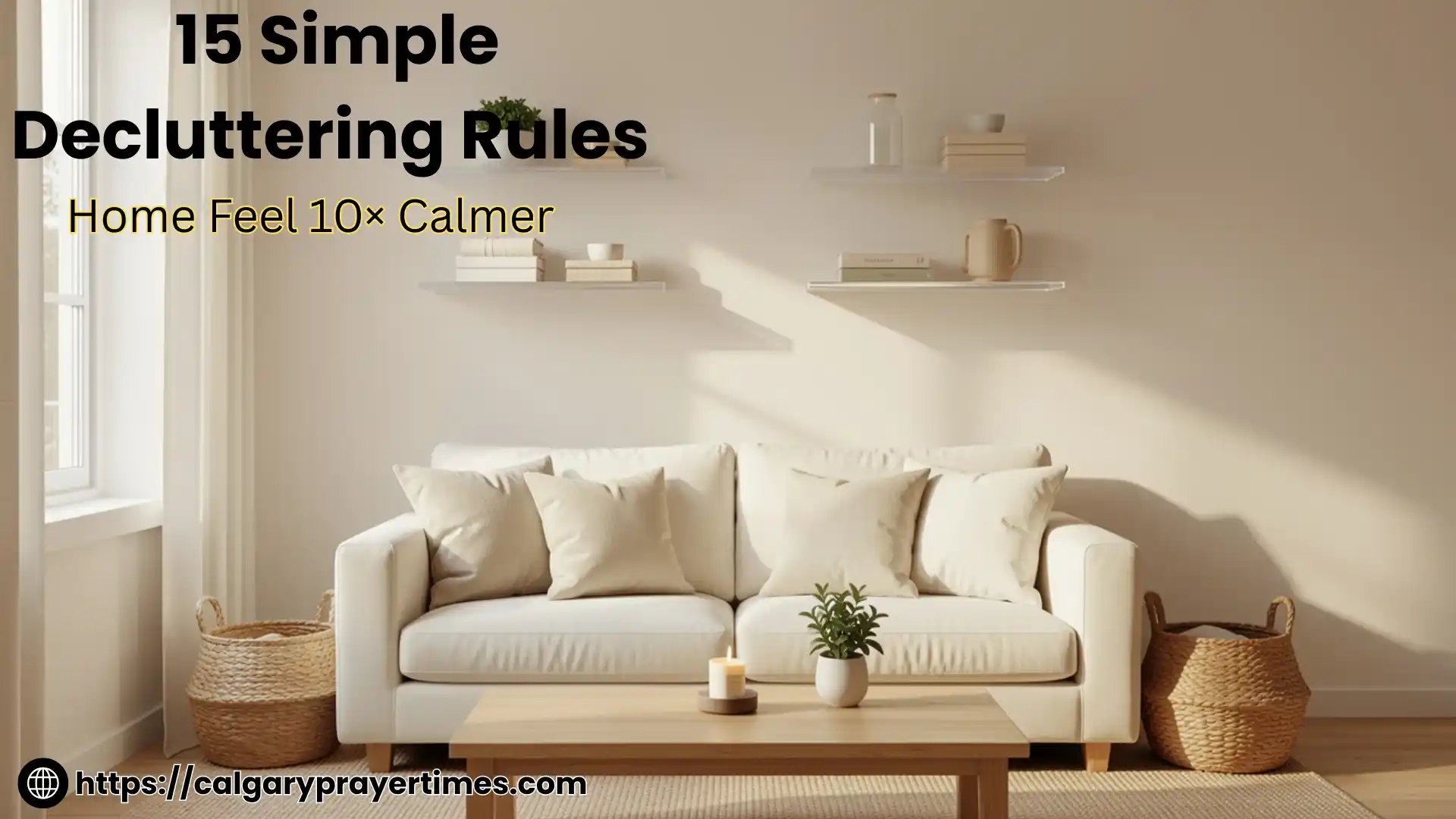
15 Simple Decluttering Rules That Will Make Your Home Feel 10 Times Calmer
Decluttering Rules Calmer Home. Does your home feel more stressful than relaxing? You are not alone. A study from Princeton University found that a messy, cluttered space makes it harder to focus and makes you feel more anxious without even realising it. The good news is you do not need to spend a whole weekend throwing everything away. You just need a few simple rules to follow, and this list gives you exactly that.
These 15 decluttering rules are easy to understand and easy to use. You can start with just one today.
Why Decluttering Makes You Feel Better
When your home is tidy, your mind feels tidier too. Research from UCLA found that women who described their homes as cluttered had higher levels of the stress hormone cortisol throughout the day. Simply clearing one surface, one shelf, one counter, one corner can give you an immediate feeling of calm and control. That feeling is your motivation to keep going.
The 15 Rules, Let’s Begin
1. Start With One Small Area, Not the Whole House
The biggest mistake people make is trying to declutter everything at once. It feels overwhelming, so they give up before they start. Instead, pick one small area. This could be your bedside table, one kitchen drawer, or the top of one shelf. Clear it completely. The feeling of finishing that one area will motivate you to do the next one.
The rule: One area per session. Always finish what you start before moving to the next spot.
2. Ask Yourself This One Question About Every Item
Pick up each item and ask: “Have I used this in the last 12 months?” If the answer is no, likely, you do not need it. You do not have to throw everything away; you can donate, gift, or recycle. But if something has sat untouched for a full year, it is probably just taking up space and adding to the visual noise in your home.
3. Give Every Item a Permanent Home
Clutter happens when things do not have a place to live. Keys end up on the kitchen counter. Bags end up on chairs. Books end up on the floor. The solution is simple: decide where each item lives and always put it back there. A great way to do this is with a Label Maker. When a drawer, shelf, or basket has a label on it, everyone in the house knows exactly where things belong, and they are much more likely to put things back. It is one of the most popular home organisation tools right now, and it is easy to see why. This is called the “one place” rule. Once everything has a home, your space almost organises itself.
4. Use the “One In, One Out” Rule
This is the rule that stops clutter from coming back. Every time something new comes into your home, a new piece of clothing, a new kitchen gadget, a new book, one old thing must leave. This keeps your total number of belongings the same, so your home never fills back up again. It sounds strict, but after a week or two, it becomes second nature.
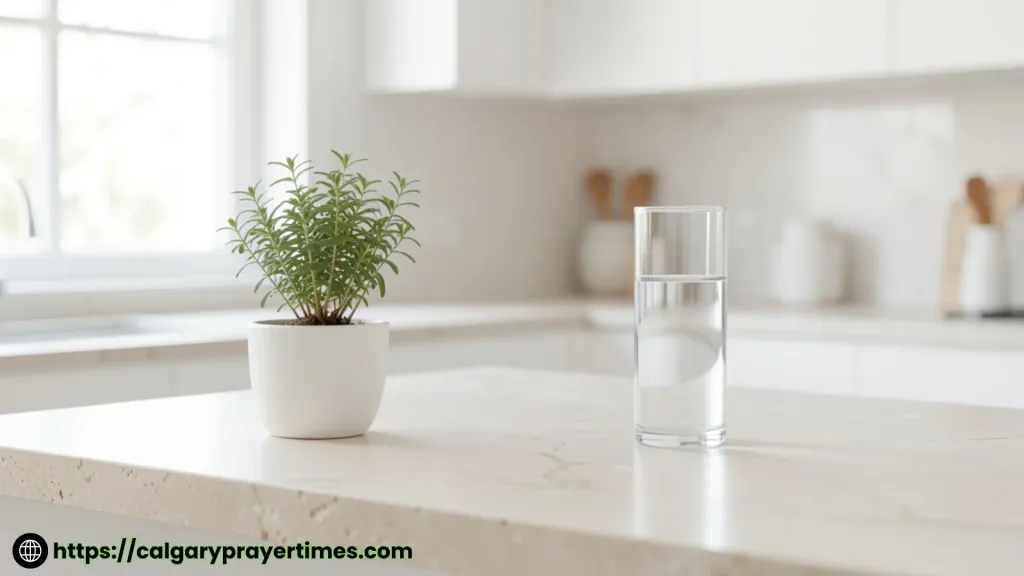
5. Clear Your Flat Surfaces Every Single Day
Flat surfaces, kitchen counters, coffee tables, the dining table, and your desk attract clutter like a magnet. Things get put down “just for a second,” and they stay for weeks. Make it a daily habit to clear all flat surfaces before you go to bed. It takes less than five minutes and makes your home look instantly cleaner and calmer, even if nothing else is tidy.
6. Sort Paper Clutter Immediately, Do Not Leave It
Paper is one of the most common sources of clutter in any home. Bills, letters, leaflets, receipts, they pile up fast. The rule is simple: deal with paper the same day it arrives. Sort it into three piles: A simple desktop file organiser with labelled folders makes this very easy. Keep one on your desk or kitchen counter with three sections already labelled: To Do, To File, and Done. This bamboo desktop organiser from Amazon looks beautiful, takes up almost no space, and is ready for action: file away, and bin. Do not leave it on the counter “to deal with later.” That pile rarely gets smaller on its own.
7. Declutter Your Wardrobe Using the Backwards Hanger Trick
This is a brilliant method for finding out which clothes you actually wear. Turn all your clothes hangers backwards so they face the wrong way. Every time you wear something and put it back, turn its hanger the right way. After 90 days, every item still on a backwards hanger is something you have not worn. Those are the items you probably do not need.
8. Use Baskets to Hide Everyday Clutter Beautifully
Some items need to be accessible, but they look messy when left out, such as remote controls, phone chargers, toys, and magazines. The solution is not to hide them in a difficult place; it is to give them a beautiful basket. A woven seagrass or rattan basket on a shelf or beside the sofa looks stylish and keeps everyday items organised. These natural woven seagrass storage baskets from Amazon, available in a set of three sizes, are one of the most popular home organisation purchases right now. They look expensive, they work brilliantly, and they are completely affordable. Thousands of buyers call them “the single best thing I bought for my home,“ and out of sight at the same time.
9. Tackle the “Junk Drawer”Give It Clear Categories
Almost every home has a junk drawer. Instead of trying to eliminate it, organise it. Empty the whole drawer. Sort the items into categories: batteries and chargers together, tools together, stationery together, and so on. Use a small organiser tray inside the drawer to keep each category separated. A junk drawer that is organised no longer feels like junk; it feels useful.
10. Declutter Digitally Too
Digital clutter causes just as much mental stress as physical clutter. Thousands of unread emails. Apps you never open. Photos you never look at. A desktop full of files. Spend 10 minutes once a week deleting old emails, removing apps you haven’t opened in months, and moving photos into organised folders. Your phone and computer are spaces you live in; they deserve to feel as calm as your home does. If you also want to keep physical cords and chargers organised, which creates a surprisingly big visual difference in your home, this cable management box from Amazon hides power strips and tangled cables completely. It is one of the cleverest small purchases for a cleaner-looking desk or living room, and it is highly rated for good reason.
11. Use Natural Storage Materials, Not Plastic Bins
In 2026, plastic storage bins are out, and natural materials are in. Bamboo, rattan, seagrass, linen, and wood storage solutions look beautiful in a home and feel calming rather than clinical. When your storage looks good, you are more likely to use it, and your home looks intentional and styled rather than just “organised.”
12. Do a 10-Item Declutter Every Sunday
You do not have to do a big declutter session to make real progress. Simply find 10 things every Sunday that you no longer need. They can be anything: an old mug, a magazine you’ve read, a piece of clothing that doesn’t fit, or an expired product. Put them in a bag for donation or recycling. That is 40 things per month, and over 500 items per year, leaving your home. The difference adds up faster than you think.
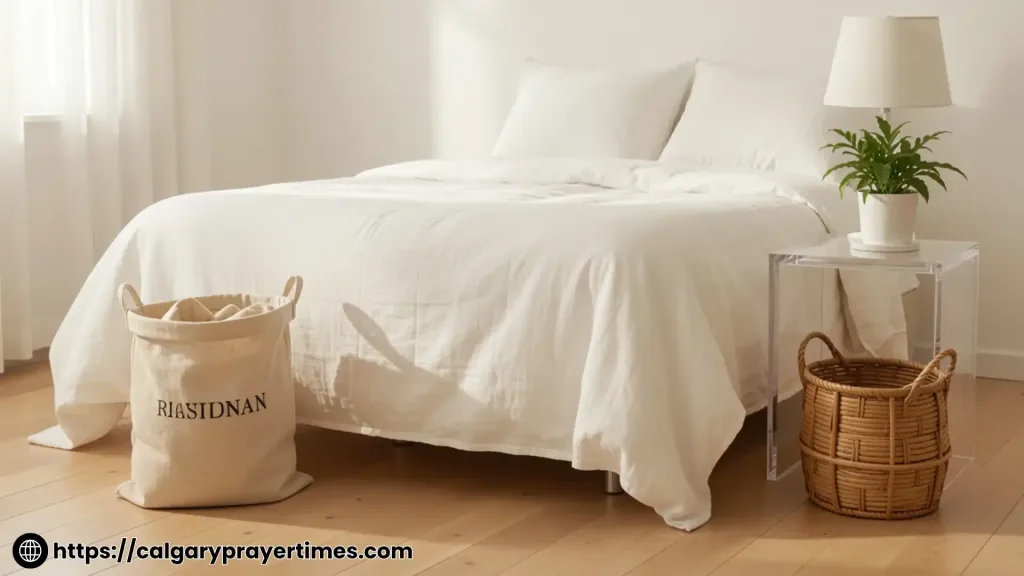
13. Keep Your Bedroom as Simple as Possible
Your bedroom is where you sleep and rest. It should feel like the calmest room in the house. Remove everything that does not need to be there. No laundry on chairs. No random items on the floor. No clutter on the bedside table except what you actually use every night. When your bedroom is simple and clear, your brain begins to associate that space with rest, and falling asleep becomes easier.
14. Organise Around Your Daily Routine
The most effective organisational systems are the ones built around how you actually live, not around how you think you should live. Think about your morning routine: what do you reach for first? Where do you always put your keys? What always ends up in a pile? Build your storage around those real habits rather than fighting them. When your storage makes sense for your routine, keeping things tidy becomes automatic.
15. Celebrate Every Small Win
Decluttering is a process, not a one-day event. Every drawer you clear, every surface you tidy, every bag of donations you drop off, celebrate it. Take a photo before and after. Notice how much lighter the space feels. Share it with a friend. The more you recognise your progress, the more motivated you will feel to keep going. A calm, beautiful home is built one small decision at a time, and you are already making them.
🏠 How to Start, A Simple 2-Week Plan
- Week 1, Day 1–2: Clear all flat surfaces in the living room and kitchen. Just the surfaces, nothing else yet.
- Day 3–4: Tackle one drawer. Sort everything into keep, donate, and bin. Use the label maker to label the drawer when done.
- Day 5–6: Sort through the paper clutter. Set up your desktop file organiser.
- Day 7 (Sunday): Find your first 10 items to donate. Put them in a bag by the front door.
- Week 2: Move to a new room. Use all 15 rules. By the end of week two, your home will feel noticeably different, lighter, calmer, and more like the space you want it to be.
❓ Frequently Asked Questions
🏠 A Calmer Home Is One Small Step Away
Save this post to your Pinterest boards and share it with anyone who needs a little home reset. If you shop any Amazon links in this post, a small commission supports us at no extra cost to you. Thank you! 💜