How to Build a Personal Wellness Routine That Actually Fits Your Real Life (Not an Ideal One)
Build Real Life Personal Routine because every January, millions of people build elaborate wellness routines: 5 am wake-ups, hour-long workouts, cold showers, 10-step skincare, meditation, journalling, and meal prep, and by the end of January, almost all of them have abandoned it. Not because they lacked discipline. Because the routine was not built for their real life. It was built for someone else’s ideal life. This guide takes a completely different approach. It shows you how to design a wellness routine that is genuinely yours, one that fits your actual schedule, your actual energy, and the life you are actually living right now.
Why Most Wellness Routines Fail in the First Two Weeks
The number one reason wellness routines fail is that they are designed at peak motivation and then expected to survive at minimum motivation. When you are feeling inspired, you can plan to wake up at 5 am, meditate for 20 minutes, exercise for 45 minutes, journal, and prep a healthy breakfast. When you are tired, stressed, or running late, which is most mornings, that routine feels impossible, and you skip it entirely. Skip it enough times, and the habit collapses.
The solution is to design your routine at minimum motivation, not maximum. Build a routine that feels genuinely manageable on your worst day, not your best one. If your worst-day version takes five minutes, you will do it every day. And consistent five-minute habits compound into transformative results over time, while elaborate routines abandoned after two weeks produce nothing.
Step 1 — Start With Your Energy Pattern, Not Your Schedule
Before you plan any wellness habits, observe your natural energy across the day for three to five days. Are you genuinely alert and motivated in the mornings, or do you come alive after 10 am? Do you have a natural energy dip after lunch? Are you most reflective and calm in the evenings? Your wellness habits should align with your natural energy, not fight against it.
Put movement and active habits in your high-energy window. Put journalling, gratitude, and reflection in your quieter windows. Put wind-down rituals in your low-energy evening. A routine built around your natural energy pattern feels like it flows, which means you are far more likely to maintain it.
Step 2 — Choose One Habit From Each Wellness Pillar
A complete personal wellness routine covers four core pillars. You only need one habit from each to have a strong foundation.
P1. Body Pillar — Movement, Sleep, and Nutrition
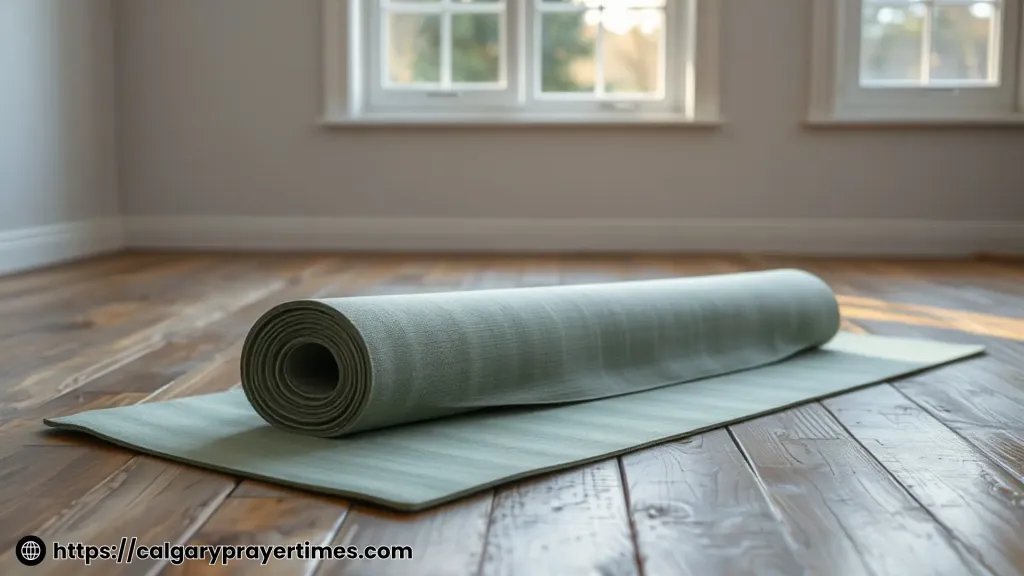
Your body is the foundation of everything. Without some form of movement, adequate sleep, and reasonable nutrition, every other wellness habit is built on sand. For the body pillar, choose just one habit to begin with, not three. The minimum effective dose for most people is a 20-minute walk every day, 7-8 hours of sleep protected by a consistent bedtime, or one nutritious meal cooked at home each day. Start with the one that currently gets the least attention in your life. A non-slip yoga mat makes any short home movement session, stretching, yoga flows, or light bodyweight exercise much more comfortable, and means your movement habit can happen in any room without any setup for a popular, affordable option that comes in several calming colours
P2. Mind Pillar — Journalling, Reading, and Mindfulness
The mind pillar addresses your mental and emotional health. For most people, the most accessible starting habit is five minutes of journaling each morning, not free-writing, but a structured format: one gratitude, one intention for the day, and one thing you are looking forward to. This three-question format takes under three minutes, never requires inspiration, and consistently generates the mental clarity that people associate with much longer mindfulness practices. If journaling feels unnatural to you, replace it with five minutes of silent meditation or ten pages of a book that genuinely interests you. A wellness planner that combines daily intention-setting, habit tracking, and weekly reflection in a single notebook makes the mind pillar incredibly easy for a beautifully designed, undated option that many people describe as the anchor of their entire daily routine.
P3. Environment Pillar — Decluttering, Scent, and Calm Spaces
Your physical environment shapes your mental state constantly, even when you are not aware of it. A cluttered, chaotic space creates background stress that drains energy all day. A calm, ordered, pleasant-smelling space actively supports your wellbeing without any effort. For the environment pillar, choose one small daily habit: a five-minute surface clear before bed, or a morning room scent ritual using a candle or diffuser, or one organisational project per week. The goal is not perfection; it is making your space feel like it is on your side.
P4. Soul Pillar — Gratitude, Prayer, and Connection
The soul pillar is often the most neglected in mainstream wellness discussions, and yet it is where the deepest and most lasting wellbeing comes from. For a Muslim, this pillar is already built into the five daily prayers, the morning and evening adhkar, and the regular recitation of the Quran. For people of other backgrounds, it might mean a morning gratitude practice, time in nature, meaningful conversation, or service to others. Whatever connects you to something larger than your immediate concerns is your soul pillar. Protect it fiercely. It is not optional.
Step 3 — Stack Habits Onto Things You Already Do
Habit stacking is one of the most effective techniques for making new habits stick. The principle is simple: attach a new habit to an existing one. “After I make my morning coffee, I will write three gratitudes.” “While I brush my teeth in the morning, I will think of one thing I am grateful for.” “After I sit down for lunch, I will drink a full glass of water first.” The existing habit acts as a reliable trigger for the new one, and since the existing habit already happens automatically, the new habit gets carried along with it.
Identify two or three existing habits that happen every single day without fail, waking up, making tea, brushing teeth, sitting down for meals, and attach one new wellness habit to each one. This is the fastest way to make new habits feel effortless rather than effortful.
Step 4 — Build the 5-Minute, 20-Minute, and 60-Minute Versions
For every wellness routine to survive real life, you need three versions of it. The 5-minute version is what you do on your worst days, running late, sick, stressed, and with no energy. It might be three gratitudes, a glass of water, and one minute of slow breathing. That is it. The 20-minute version is your standard daily routine, your baseline that happens on a typical morning. The 60-minute version is your ideal routine for when you have extra time and energy, a rest day, a slow Sunday morning, or a particularly good day. Having all three versions means you never skip entirely, you always do at least the 5-minute version, and that consistency is what builds the habit over months.
Step 5 — Track It Simply Without Overcomplicating It
Tracking your wellness habits is important, but only if the tracking itself is simple enough to do every day without becoming a chore. A weekly page in a journal or planner with one tick per habit is all you need. Spend 30 seconds at the end of each day marking what you did. At the end of each week, count your ticks. This simple visual record builds something valuable over time: evidence. When motivation dips, and it will, looking back and seeing weeks of consistent small actions is often the one thing that keeps people going. A simple, undated habit tracker notebook, one page per week, nothing complicated, makes tracking effortless and visual for a popular option that many people describe as the tool that finally made their habits consistent.
Sample Wellness Routines for 4 Different Lifestyles
Busy parent with young children: Morning — glass of water + 3 gratitudes while coffee brews (3 min). Afternoon — 10-minute walk during nap time or school run. Evening — 5-minute surface clear + candle on (5 min).
Working full-time from home: Morning — journal 3 intentions + 10-minute stretch (15 min). Lunch — glass of water before eating + screen-free meal. Evening — foam roller + 3 end-of-day reflections (10 min).
Student with an unpredictable schedule: Morning — 5-minute gratitude walk to class. Evening — 10 pages of a personal growth book before bed. Weekend — Sunday reset with brain dump and weekly priorities.
Retiree with more time available: Morning — Fajr prayer + Quran recitation + gratitude journal (20 min). Mid-morning — 30-minute walk + herbal tea ritual. Afternoon — one learning activity or creative hobby. Evening — Quran or reading + early sleep routine.
How to Keep Going When You Miss a Day
Missing one day is not a problem. Missing two days in a row is when habits begin to break. The rule is simple: never miss twice. If you skip your routine today, make a firm commitment to do at least the 5-minute version tomorrow, whatever it takes. Progress is not linear, and a real sustainable routine has missed days built into its design. You are not building a perfect record. You are building a direction of travel. A foam roller used for 5 minutes in the evening is one of the best investments in your body’s pillar. It reduces muscle tension and becomes a genuinely enjoyable part of any wind-down routine for a highly rated option that suits all levels.

❓ Frequently Asked Questions (FAQs)
💆 Your Wellness Routine Starts With One Honest Habit
Save this post and come back to it every time you want to reset or refine your routine. If you purchase through any links in this post, a small commission supports this blog at no extra cost to you. Thank you for being here. 💜