10 Smart Kitchen Habits That Save Time, Reduce Stress, and Make Every Meal Easier
Smart Kitchen Habits Save Time, Reduce Stress. The kitchen is where most daily household stress originates and where the smallest habit changes have the most immediate impact on how the rest of your day feels. A kitchen that requires fifteen minutes of finding things before you can start cooking, that is always one step behind on washing up, and that has no system for knowing what is in it before you shop generates a low-level daily friction that compounds into real exhaustion over time. These 10 habits eliminate that friction, one small change at a time.
Why Kitchen Habits Matter More Than Kitchen Products
The most common approach to kitchen organisation is to purchase a new knife block, a pull-out organiser, and a new set of containers. These help when they are part of a system, but they fail when they are not. A beautiful set of glass jars filled with ingredients you did not know you already had does not save time. A habit of auditing what you have before shopping does. A new cutting board does not save time. A habit of setting out tonight’s ingredients while you make this morning’s coffee does. The habits come first, then the tools support them.
The 10 Smart Kitchen Habits
1. The One-Minute Kitchen Reset After Every Meal
The single most impactful kitchen habit is the one-minute reset: the moment a meal is finished or cleared, every item used goes directly to the sink or dishwasher, every surface is wiped, and the kitchen is returned to “ready” state before you leave it. This habit, which takes between 60 and 120 seconds when done immediately after eating, prevents the gradual accumulation of dishes, surfaces, and disorder that makes the kitchen feel overwhelming by evening. A kitchen that is always one step from ready is dramatically easier to cook in than one that requires 10–15 minutes of clearing before you can even begin.
2. Mise en Place, Set Everything Out Before You Start Cooking
Mise en place is the French culinary term for “everything in its place,” the professional kitchen practice of preparing and organising all ingredients before any cooking begins. It is the single most effective habit for reducing cooking stress and cooking errors, because it eliminates the mid-cook discovery that you are missing an ingredient, the burning-while-you-search experience, and the mental multitasking of simultaneously cooking and preparing. Before you light the stove, set out every ingredient you need, measured and ready. Chop what needs to be chopped. Open tins. Preheat what needs to be preheated. This takes an extra three to five minutes of preparation and saves significantly more than that in cooking stress. A set of small prep bowls for mise en place ingredient staging, usually sold as a set of four to six in graduated sizes, makes this habit instantly more enjoyable and significantly more effective than using random mugs and plates as staging vessels.
3. Weekly Fridge Audit on Shopping Day
Before writing your grocery list, spend five minutes doing a full fridge audit: pull everything forward, check what is close to expiry, and build your shopping list around using those items first. This habit alone eliminates the two most common causes of kitchen stress in North American households: running out of something you thought you had, and finding something you did not know you had but which is now too old to use. At the national average of $1,500 in annual food waste per household, even a 30% reduction through this habit saves $450 per year. It also makes grocery shopping faster because the list is accurate and complete.

4. The “Tomorrow’s Dinner” Evening Check-In
Each evening, spend 90 seconds thinking about tomorrow’s dinner: what you are making, whether everything needed is available, and whether anything needs to be defrosted or marinated overnight. This single check-in eliminates the most common cause of North American weeknight takeout spending: arriving home at 6 PM, opening the fridge, finding nothing immediately ready to cook, and ordering food. When tomorrow’s dinner is already planned and prepared at the most basic level (chicken defrosting, vegetables washed and in a container, pasta in the pot), cooking a weeknight meal takes 20 minutes instead of 45 and feels achievable rather than overwhelming after a full working day.
5. Prep One Batch of Grains or Proteins Each Sunday
A single 20-minute Sunday prep cooking a large batch of a versatile grain (quinoa, rice, or farro) and a simple protein (roasted chickpeas, boiled eggs, or baked chicken thighs) creates the foundation for three to four weekday lunches or dinners with almost no additional cooking. These base components combine with whatever fresh vegetables are available, whatever sauce is in the fridge, and whatever grain is cooked to produce an infinite number of bowls, salads, and quick meals that take five minutes to assemble. North American meal prep content consistently shows this “base-component” approach rather than full meal prep as the most sustainable and least overwhelming system for busy households. A set of glass meal prep containers with airtight lids in three sizes makes the Sunday batch cooking habit significantly more enjoyable. The ingredients look beautiful, stay fresh longer, and make assembling a quick meal genuinely satisfying rather than just functional.
6. Keep Your Three Most-Used Tools Accessible and Sharp
The most consistent friction point in North American home cooking is working with dull knives and inaccessible tools. A good knife that is properly sharp requires half the force, half the time, and produces safer and cleaner cuts than a dull one. If you cook at home even three times per week, investing in a knife sharpener and using it monthly is one of the highest-return kitchen investments available. The same principle applies to any tool you reach for daily: keep it in the most accessible spot in your kitchen, not in a drawer behind twelve other things. The three tools most people use most often are a chef’s knife, a wooden spoon or silicone spatula, and a cutting board. Make these three things the most immediately accessible items in your cooking space.
7. Decant Dry Goods Into Clear Containers — And Label Them
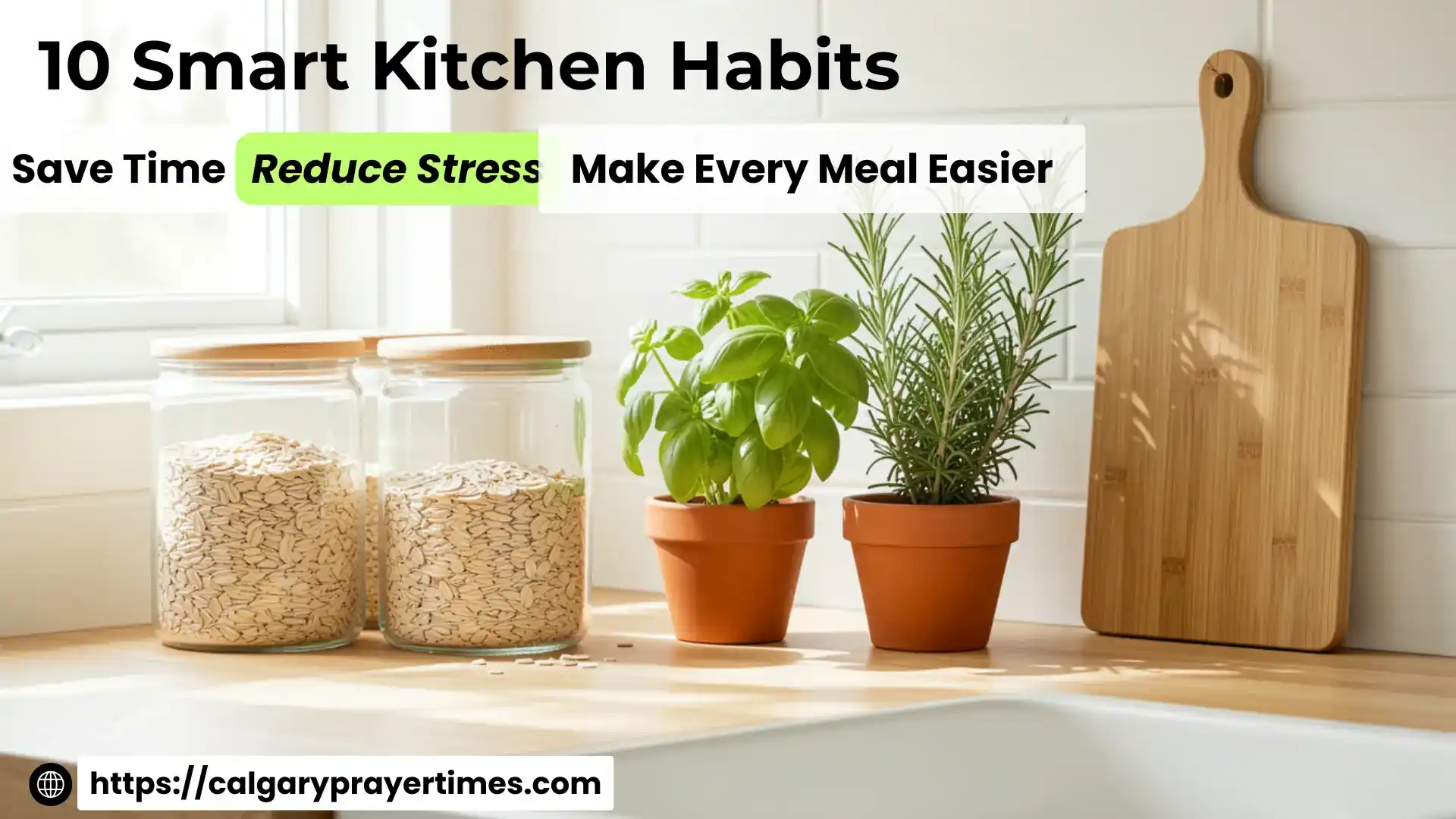
Storing dry goods, pasta, rice, oats, lentils, flour, sugar, coffee, and tea in matching clear glass or acrylic containers with visible contents and labels is not primarily an aesthetic choice (though it is a beautiful one). It is a functional habit that makes cooking faster (you can see at a glance what you have and how much), reduces food waste (no forgotten items buried behind branded packaging), and makes restocking accurate (you know exactly when something needs replenishing). The habit takes one afternoon to set up initially and then maintains itself in under two minutes per week. The investment in containers is a one-time cost that typically pays for itself in reduced food waste within a few months.
8. Cook Bigger Batches — Let Your Leftovers Work for You
The most time-efficient cooking habit is also one of the most overlooked: cooking double portions of every dinner and deliberately using the second portion as tomorrow’s lunch. This requires no additional shopping, almost no additional cooking time (a slightly larger pot, two more minutes of prep), and eliminates the daily “what do I have for lunch” decision entirely. Research on decision fatigue shows that reducing the number of daily decisions, including what to eat, measurably improves cognitive function, mood, and productivity throughout the day. A kitchen that generates tomorrow’s lunch as a by-product of tonight’s dinner is one of the most quietly valuable systems in a well-run home.
9. The “Clean As You Go” Cooking Habit
Professional chefs clean as they cook, not as a discipline, but because a clear workspace is a more effective workspace. Rinsing a bowl immediately after using it takes ten seconds. Placing used tools in the sink rather than on the counter takes two seconds. Wiping down the counter between prep stages takes thirty seconds. These micro-cleanings during cooking eliminate the overwhelming pile of washing up that awaits at the end of a meal and keep the workspace clear enough to think and move in. By the time the meal is ready, the kitchen is 70–80% clean, meaning the post-meal reset takes under two minutes instead of fifteen.
10. End Every Week With a “Use It Up” Meal
Designate one evening per week, Friday or Sunday works well for most North American households, as the “use it up” dinner: a meal made entirely from whatever is left in the fridge, freezer, and pantry before the next shopping trip. This habit prevents the gradual accumulation of forgotten ingredients that eventually get thrown away, forces creative cooking that often produces surprisingly good results, and saves the cost of one shopping trip’s worth of ingredients per month for families who implement it consistently. Over a year, a weekly “use it up” meal saves the average North American household $200–$400 in food costs and prevents approximately 15–25% of annual food waste. A kitchen herb garden starter kit with three small terracotta pots and seed packets makes the “use it up” cooking habit more enjoyable and more flavourful. Fresh herbs from a windowsill pot transform simple, end-of-week ingredient combinations into genuinely delicious meals for almost no cost.

🍳 Your Kitchen Habit Starter Plan — This Week
- Today: Implement the one-minute reset after every meal, starting at tonight’s dinner.
- Tomorrow morning: Before cooking breakfast, set everything out (mise en place). Notice how different it feels.
- Before your next shop: Do a five-minute fridge audit first. Write your list from what is already there.
- This Sunday: Cook one batch of a grain and one simple protein. Use them across the week.
- Each weeknight: Do the 90-second tomorrow’s dinner check-in before you go to sleep.
- This weekend: Designate the next Saturday or Sunday dinner as the “use it up” meal.
❓ Frequently Asked Questions (FAQs)
🍳 A Calmer Kitchen Is Three Small Habits Away
Save this post to your kitchen or home organisation boards. If you purchase through any link in this post, a small commission supports this blog at no cost to you. Thank you! 💚