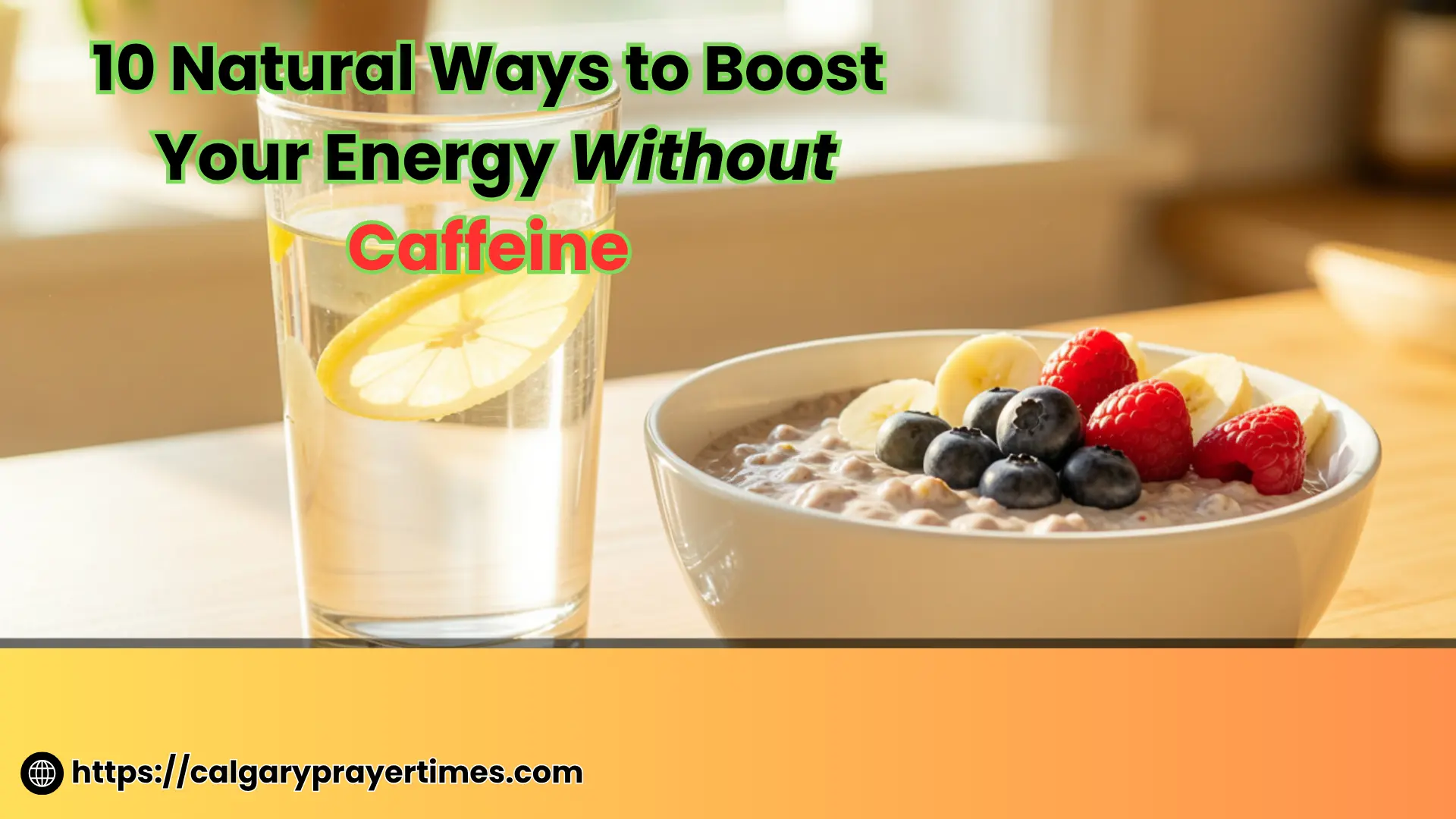
10 Natural Ways to Boost Your Energy Without Caffeine (That Actually Work All Day)
Natural Ways Boost Energy Without Caffeine. Because Caffeine is not bad for you in moderation, research suggests that two or three cups of coffee or tea per day have genuine health benefits. The problem is when caffeine becomes the only tool for managing energy when you cannot function without it, when you need it to feel human in the morning, when the afternoon slump hits, and you reach for a third cup out of habit rather than enjoyment. This post is about building a foundation of natural energy that makes you less dependent on caffeine, not by giving it up, but by giving your body what it actually needs to generate real, sustained energy all day.
Why Caffeine Dependency Happens and What to Do Instead
Caffeine works by blocking adenosine receptors, the receptors that accumulate throughout the day and create feelings of tiredness. This blocking effect creates alertness, but it does not clear the underlying adenosine; it simply delays the feeling. When the caffeine wears off, the backed-up adenosine floods the receptors all at once, creating the familiar afternoon crash. Over time, the brain compensates for regular caffeine by producing more adenosine receptors, which means you need more caffeine to get the same effect. The result is a dependency that creates the problem it purports to solve.
The alternative is to work with your body’s natural energy systems rather than overriding them. These 10 methods do exactly that.
The 10 Natural Energy Boosters
1. Drink a Large Glass of Water the Moment You Wake Up
After 7–9 hours of sleep without drinking anything, your body wakes up mildly dehydrated, even if you do not feel thirsty. Research shows that mild dehydration of just 1–2% of body weight reduces energy levels, concentration, and mood in ways that are often mistaken for a need for caffeine. Drinking 400–500ml of cold water immediately upon waking rehydrates cells, activates the metabolism, and produces a measurable improvement in alertness within 15–20 minutes.
This is the simplest, fastest, and most underrated natural energy tip available. Many people who try it report that it reduces or eliminates their need for an immediate morning coffee, not because it replaces the caffeine, but because much of what felt like “needing coffee” was simply dehydration. Add a slice of lemon for a small vitamin C boost and to improve the taste if plain water first thing feels unappealing. Keeping a clear glass water bottle with a bamboo lid on your bedside table the night before makes this habit completely effortless. The water is the first thing you see when you open your eyes.
2. Get 10–20 Minutes of Morning Sunlight
Morning sunlight is the most powerful natural energy signal your body has. When light from outdoors enters your eyes in the morning, it triggers a precise neurochemical cascade: cortisol (the alertness hormone) peaks appropriately, serotonin production rises, and the circadian rhythm is synchronised for the day ahead. This synchronisation means your energy will be higher and more consistent throughout the day, your afternoon dip will be less severe, and your melatonin will rise at the right time in the evening for better sleep, which produces better energy the following day.
Even on a cloudy day, outdoor light is significantly more intense than any indoor artificial lighting and triggers the same response. Step outside within the first hour of waking without sunglasses, which filter the light that the brain needs to receive for 10–20 minutes. A morning walk achieves this while also providing the movement benefits described in Habit 3.
3. Move for 10 Minutes When Your Energy Dips
When you feel an energy dip, typically mid-morning or mid-afternoon, the worst response is to sit still and power through. The best response is to move. Research from the University of Georgia found that a 10-minute brisk walk provides a greater energy boost than a 50mg dose of caffeine. Movement increases heart rate, delivers more oxygen to the brain, releases endorphins, and triggers a genuine neurological alertness response that outperforms the caffeine-adenosine blocking mechanism in terms of sustained energy.
Use the natural energy dips in your day as triggers for movement rather than as signals to reach for caffeine. A 10-minute walk around the block, up and down a flight of stairs, or through your garden will produce more sustained energy than a coffee and without the subsequent crash.

4. Eat a High-Protein, Complex-Carb Breakfast
The foods you eat in the morning determine your energy pattern for the next 3–5 hours. A sugary breakfast cereal, toast with jam, pastries, and sweetened yoghurt produce a rapid blood sugar spike followed by an equally rapid crash, leaving you more tired and hungrier an hour or two later than if you had not eaten at all. A balanced breakfast of protein, complex carbohydrates, and healthy fats produces a slow, steady glucose release that keeps your energy stable and your concentration sharp for hours without any crash.
The simplest high-energy breakfast formula: one protein source (eggs, Greek yoghurt, nuts, or nut butter), one complex carbohydrate (oats, whole grain toast, or a banana), and one source of healthy fat (avocado, nuts, or olive oil). This combination takes under 10 minutes to prepare and produces energy that lasts without any caffeine needed.
5. Try Box Breathing for an Instant Alertness Reset
Your breathing pattern directly affects your blood oxygen levels, your heart rate, and your neurological state of alertness. Most people in a tired or stressed state breathe shallowly and rapidly, which reduces oxygen delivery to the brain and reinforces the sense of fatigue. Box breathing (also called square breathing) is a specific breathing technique used by military special forces, elite athletes, and emergency room staff to rapidly shift from tired or stressed to alert and focused.
The technique: inhale slowly for 4 counts through the nose, hold for 4 counts, exhale slowly for 4 counts through the mouth, hold for 4 counts. Repeat 4–6 times. The entire practice takes under 90 seconds and produces an immediate increase in blood oxygen, a lowering of cortisol, and a measurable improvement in alertness and focus. Use it whenever you feel an energy dip, before an important task, or as a mid-morning reset.
6. Eat Snacks That Sustain Rather Than Spike
The mid-morning and mid-afternoon snacks most people reach for are biscuits, crisps, chocolate bars, and fruit juices, which cause a rapid blood sugar spike that briefly feels like an energy boost, followed within 30–60 minutes by a crash that leaves you more tired than before. Snacks that sustain energy are those that combine protein, fibre, and healthy fat, slowing glucose absorption and providing a steady release of energy without the spike-and-crash pattern. The best natural energy snacks: a small handful of mixed nuts, apple slices with nut butter, a boiled egg with cucumber, natural yoghurt with a few berries, or a rice cake with avocado. A set of small glass food prep containers makes it easy to prepare and portion your energy snacks at the start of the week. When a healthy snack is already ready and visible in the fridge, you reach for it instead of the biscuit tin without even thinking about it.
7. Take Strategic Rest Breaks Every 90 Minutes
Research on ultradian rhythms, the body’s internal 90-minute activity cycles, shows that humans naturally experience peaks and troughs of mental alertness throughout the day. Attempting to work through the trough phase produces diminishing returns, increasing errors, and building fatigue that reduces the quality of the subsequent peak. Taking a 5–10 minute genuine rest break every 90 minutes, not scrolling, not working, but genuinely stepping away, breathing, stretching, or looking out a window, allows the body to complete its natural recovery cycle and return to peak alertness for the next activity period.
This approach consistently produces more sustained energy and higher-quality output over a full working day than continuous working. Set a timer for 90 minutes of focused work, then take 10 minutes of genuine rest before the next block.
8. Try Green Tea Instead of Coffee for Afternoon Energy
Green tea contains two compounds that together produce a very different energy effect from coffee: caffeine (25–50mg per cup, compared to 80–150mg in coffee) and L-theanine, an amino acid that promotes focused calm without sedation. The combination of lower caffeine and L-theanine produces what researchers describe as “alert relaxation,” improved focus, reduced anxiety, and sustained alertness without the jitteriness, anxiety, or post-crash that higher-caffeine drinks often produce. Switching from afternoon coffee to green tea provides enough caffeine to ward off drowsiness without the sleep-disrupting levels that afternoon coffee delivers.
9. Splash Cold Water on Your Face, Instant Alertness
Cold water exposure, even as brief as splashing cold water on your face and the back of your neck, triggers an immediate release of norepinephrine in the brain, producing an instant spike in alertness and focus that is measurable within seconds. This technique is used by surgeons, pilots, and military personnel as an emergency alertness reset because it requires no preparation, no equipment, and no time, just a bathroom and 30 seconds. For an even stronger effect, ending your morning shower with 30–60 seconds of cold water produces similar norepinephrine and dopamine increases that last for 2–4 hours after the shower.
10. Prioritise Sleep, Energy Is Built Overnight
The single most important natural energy habit is also the most obvious one that most people ignore: adequate, quality sleep. Every other method in this post produces temporary or modest benefits. Sleep 7–9 hours of quality sleep per night, consistently, is the only intervention that resets your energy systems at the cellular level. During deep sleep, your body clears adenosine (the fatigue molecule), restores glycogen reserves in muscles, consolidates memory, regulates hormones, and repairs cellular damage. No amount of caffeine, exercise, or nutrition can compensate for a chronic sleep deficit. If you are consistently tired despite implementing the other habits, poor sleep is almost certainly the root cause. A contoured light-blocking sleep mask is one of the most cost-effective investments in sleep quality and, therefore, in daily energy that you can make, especially for anyone whose bedroom cannot be made fully dark.

⚡ Your Natural Energy Plan, Day by Day
- Day 1: Place a glass of water on your bedside table tonight. Drink it the moment you wake up tomorrow.
- Day 2–3: Add 10 minutes of morning sunlight, even just standing outside with your tea.
- Day 4–5: Replace your afternoon coffee with green tea. Prepare a protein-based snack for your afternoon energy dip.
- Day 6–7: Try box breathing (4-4-4-4) when you feel your energy drop. Take a 10-minute walk instead of the next coffee.
- Day 8–9: Eat a protein + complex carb breakfast every morning. Pre-portion your energy snacks for the week.
- Week 2: Add 90-minute work blocks with 10-minute genuine breaks. Prioritise sleep above all else. By day 14, the energy difference will be unmistakable.
❓ Frequently Asked Questions
⚡ Real Energy, Without the Crash
Save this post to your wellness boards and share it with anyone who relies on caffeine to get through the day. If you purchase through any links in this post, a small commission supports this blog at no extra cost to you. Thank you! 🧡