12 Science-Backed Stress Relief Tips That Will Actually Change How You Feel
Stress Relief Tips that work in a world that was not designed for calm. The notifications, the deadlines, the endless scroll, it all adds up in your body before your mind even registers it. But here is what science keeps confirming: stress is not something you simply endure. It is something you can actively, deliberately, and effectively reduce. These 12 stress relief tips are rooted in real research, require no prescription, and can be started today, most of them from the comfort of your own home.
Natural Anxiety Relief Hacks
Before we dive in, a gentle reminder: stress management is not about achieving perfect zen. It is about giving your nervous system regular moments of genuine rest, so that when life gets hard, you will have real reserves to draw from. Let’s build those reserves together.
1. Use an Aromatherapy Diffuser Before Bed
Aromatherapy is one of the most studied natural stress-relief tools available. Lavender, in particular, has been shown in multiple clinical studies to reduce anxiety, lower heart rate, and measurably improve sleep quality. The mechanism is direct: scent molecules travel through the olfactory nerve straight to the limbic system, the brain’s emotional control centre, bypassing the rational mind entirely and triggering a physiological calm response.
An ultrasonic diffuser disperses essential oils into the air as a cool mist, running silently throughout the evening. Place it on your bedside table, fill it with water, add 5–8 drops of lavender or a calming blend, and let it work while you wind down. The ritual of turning it on each evening itself becomes a powerful psychological cue: time to let go of the day.
2. Try the 4-7-8 Breathing Method
Developed by Dr. Andrew Weil and rooted in ancient pranayama breathing, the 4-7-8 technique is one of the most powerful and immediate stress relief tools available, and it costs nothing. Here is how it works: inhale through your nose for 4 seconds, hold your breath for 7 seconds, then exhale slowly through your mouth for 8 seconds. That’s one cycle. Do four cycles.
The extended exhale activates the parasympathetic nervous system, your body’s built-in rest-and-digest mode, overriding the fight-or-flight stress response. Within two to three minutes, heart rate slows, blood pressure drops, and the mental noise quietens noticeably. Use it at the onset of anxiety, before sleep, or any time you feel overwhelmed during the day.
3. Swap Evening Scrolling for a Gratitude Journal
Research from Harvard Health Publishing shows that people who write down three specific things they are grateful for each evening fall asleep faster, feel more optimistic, and experience measurably lower anxiety levels within three weeks of consistent practice. The reason is neurological: gratitude journaling actively shifts the brain’s focus from threat-detection mode (which keeps stress elevated) toward appreciation and positive anticipation.
The keyword is specific. “I am grateful for my family” is less effective than “I am grateful that my sister called today and made me laugh.” Specificity makes the emotion real, and real emotion is what rewires the brain.
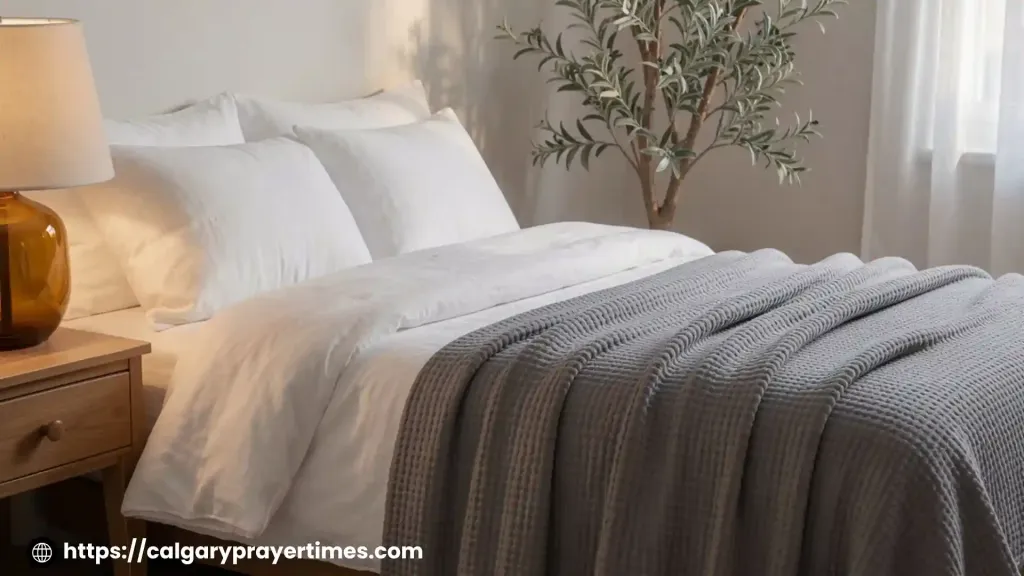
4. Use a Weighted Blanket for Deeper Sleep and Calmer Evenings
Weighted blankets work through a mechanism called deep pressure stimulation, the same neurological principle behind a firm hug. When gentle, evenly distributed weight is applied to the body, serotonin levels rise, cortisol (the primary stress hormone) drops, and melatonin production increases. Multiple peer-reviewed studies have confirmed the effectiveness of weighted blankets for reducing anxiety, improving sleep onset, and lowering the heart rate during rest.
Choose a weighted blanket that is approximately 10% of your body weight. This is the widely cited guideline for optimal deep pressure stimulation. If you sleep warm, look specifically for a blanket with a bamboo or cooling cotton cover, which makes a significant difference in comfort and usability year-round.
5. Create a Herbal Tea Ritual as a Daily Decompression Habit
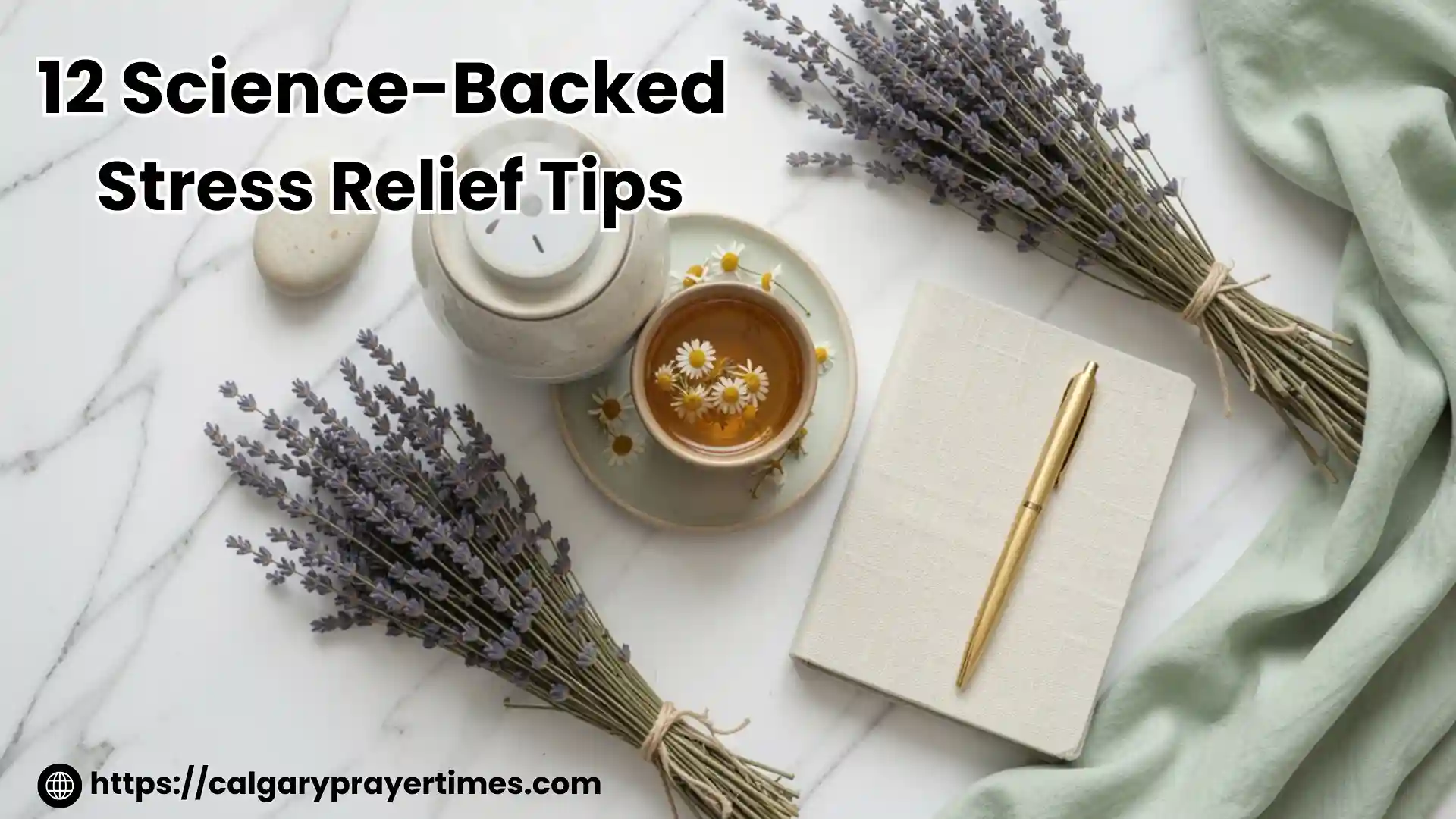
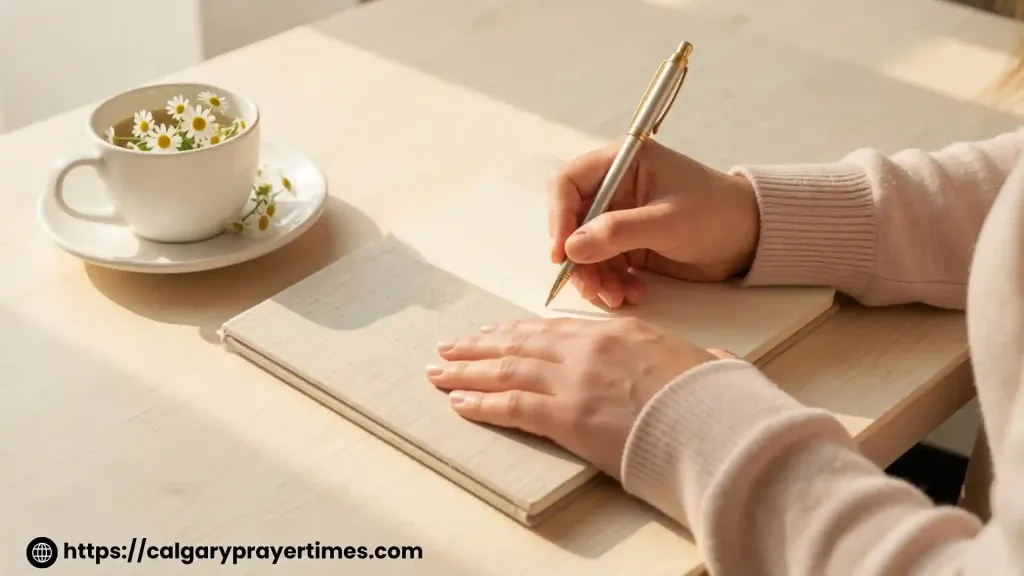
A ritual is a deliberate act performed consistently, and its power comes not only from its physical effect but from the intentionality behind it. Brewing a cup of herbal tea in the evening is the kind of small, sensory, low-effort ritual that anchors the nervous system. The warmth, the scent, and the act of pausing it all signal safety and a slowdown to a body that has been running on alert all day.
Beyond the ritual element, specific herbs have genuine clinical support. Chamomile contains apigenin, a compound that binds to GABA receptors in the brain and produces mild sedation and anxiety relief. Ashwagandha has been shown to lower cortisol levels in chronically stressed adults. Lemon balm reduces mild anxiety and promotes relaxation without causing drowsiness.
6. Take a 10-Minute Walk in Natural Daylight
Outdoor exposure to natural light, especially in the morning, resets your circadian rhythm, suppresses lingering cortisol, and triggers the release of serotonin, the brain’s primary mood-regulating chemical. Research from Stanford University found that even a 90-minute nature walk measurably reduced rumination and lowered neural activity in the brain’s stress-response region. You do not need 90 minutes. Studies show benefits begin with as little as 10 minutes outdoors in natural light.
If you can combine this with a short walk, even around your neighbourhood or garden, the light physical movement adds an endorphin boost. The combination of movement, light, and fresh air is arguably the most accessible and underrated stress relief stack in existence.
7. Try Cold Water Face Splashing (The Mammalian Dive Reflex)
This is a physiological trick, not a wellness gimmick. The mammalian dive reflex is an involuntary nervous system response shared by all mammals: when the face, particularly the forehead, eyes, and cheeks, is submerged in or splashed with cold water, the heart rate immediately slows, and the body enters a calmer state. It is the same reflex that slows a diver’s heart rate underwater.
To use it for stress relief: fill a bowl with cold water (add a few ice cubes for a stronger effect), take a deep breath in, and submerge your face for 15–30 seconds. Alternatively, splash cold water vigorously on your face for 30 seconds. The effect is fast, free, and clinically documented as an effective technique for interrupting acute anxiety or panic.
8. Practice 5 Minutes of Progressive Muscle Relaxation
Progressive Muscle Relaxation (PMR) is a technique developed by physician Edmund Jacobson in the 1920s and validated by decades of subsequent research. It works by systematically tensing and then fully releasing each major muscle group in the body, starting with the feet and working upward to the face. The contrast between the tension and the release teaches the body what genuine relaxation feels like and actively breaks the cycle of chronic physical stress.
Many people who feel mentally stressed don’t realise they are also chronically physically tense, particularly in the jaw, shoulders, and stomach. PMR makes that tension conscious and gives you a direct tool to release it. Five minutes before sleep is ideal, though it can be done anywhere, at any time.
9. Reduce Screen Time After 8 PM, Protect Your Wind-Down Window
Blue light emitted by phones, tablets, and laptops actively suppresses melatonin production, the hormone that signals to your body that it’s time to sleep, by up to 50% when exposure occurs in the two hours before bed. But beyond the physical effect on sleep hormones, evening screen time keeps the brain in a state of stimulation: processing news, social comparisons, notifications, and endless information. This is the exact opposite of what a stressed nervous system needs.
Set a gentle rule: phones and screens go face-down or into another room at 8 PM. Replace that time with any of the habits on this list. The initial discomfort of breaking the scrolling habit fades within five to seven days, and what emerges on the other side is genuinely calmer evenings and noticeably better sleep.
10. Listen to Binaural Beats or Nature Sounds
Binaural beats are an auditory processing technique where two slightly different frequencies are played in each ear simultaneously, causing the brain to perceive a third “beat” which then gently guides brainwave activity toward a calmer state. Theta waves (4–8 Hz) are associated with deep relaxation and light sleep. Delta waves (1–4 Hz) are associated with deep, restorative sleep. Multiple studies have demonstrated that listening to binaural beats reduces anxiety and improves sleep quality with consistent use.
For a simpler alternative, nature sounds, such as rain, ocean waves, forest birdsong, or flowing water, have been shown to lower cortisol and heart rate within minutes of listening. Both are available for free on YouTube and in most music streaming apps. Use headphones for binaural beats to get the full effect.
11. Declutter One Small Space to Quieten Your Mind
Visual clutter is a documented stressor. A Princeton University Neuroscience Institute study found that physical clutter in your environment competes for your brain’s attention, reducing your ability to focus and increasing background stress levels even when you are not consciously aware of it. This means that a cluttered environment is actively making you more stressed, all day, even when you are at rest.
The fix does not need to be a whole-house overhaul. Choose one surface: a coffee table, a kitchen counter, or a bedside table, and spend five minutes making it completely clear and intentional. The psychological relief from a single clear, calm surface is immediate and disproportionate to the effort. Start small. Stay consistent.
12. Practise Self-Compassion, Silence the Inner Critic
Dr. Kristin Neff’s landmark research at the University of Texas established that self-compassion, treating yourself with the same kindness you would extend to a close friend, is more strongly associated with psychological well-being and resilience than self-esteem. When we fail, make a mistake, or feel overwhelmed, the instinct is often self-criticism. And that internal critical voice triggers the same physiological stress response as a threat from the outside world.
Stress often compounds itself through self-judgement: “I shouldn’t be this stressed.” “Other people handle this fine.” These thoughts add another layer of cortisol onto an already-loaded system. The antidote is simple, free, and instantly available: place a hand on your heart, take a breath, and say (silently or aloud) “This is hard. It’s okay that it’s hard. I’m doing my best.” Research confirms this works. Use it freely.
🌿 Step-by-Step: Your Personalised Stress Relief Starter Plan
Don’t try to implement all twelve tips at once. That itself becomes stressful. Follow this six-step sequence to build your stress-relief toolkit gradually, over two weeks.
- Day 1–2: Add the 4-7-8 breathing method to your morning routine. Two minutes when you wake up. No equipment, no cost.
- Day 3–4: Set up your aromatherapy diffuser on your bedside table and use it each evening. Let the scent become your wind-down cue.
- Day 5–6: Introduce your herbal tea ritual at 8 PM. The same time each night. Screen goes away, tea comes out.
- Day 7–8: Start your gratitude journal. Three specific things each evening before sleep. Five minutes maximum.
- Day 9–10: Add a 10-minute morning walk in natural daylight. Pair it with your existing morning routine — after breakfast, after prayer, or after your first drink.
- Day 11–14: Introduce the weighted blanket for evening reading or sleep. Add PMR before you close your eyes. By now, you have a complete stress-relief system that is entirely yours.