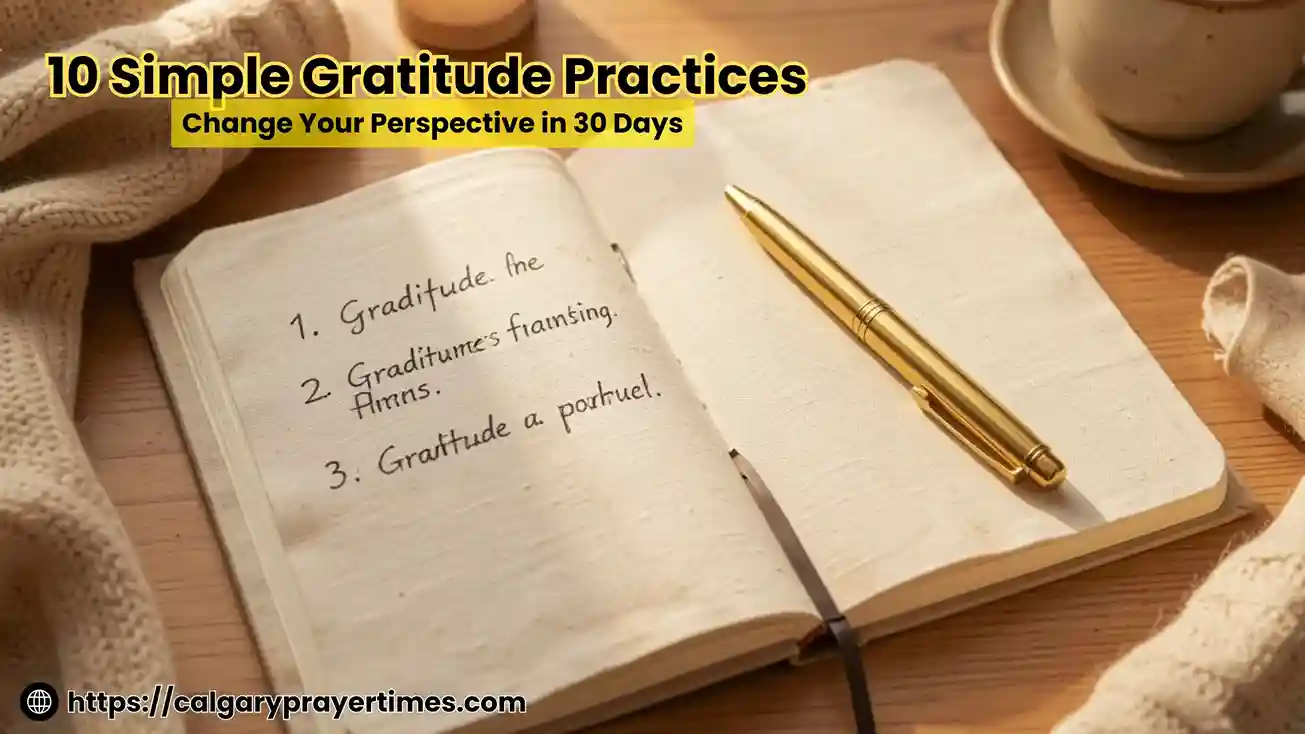
10 Simple Gratitude Practices That Will Completely Change Your Perspective in 30 Days
Gratitude practices perspective. Gratitude is not about pretending everything is fine when it is not. It is not toxic positivity. It is a simple, science-backed mental habit, the practice of deliberately looking for what is good in your life, even on the hard days. Research shows that people who practise gratitude consistently experience lower stress, better sleep, stronger relationships, and a genuinely more positive outlook on life. The good news is you can start right now, with nothing more than a notebook and five minutes of your time.
These 10 practices are simple enough for anyone to begin today. Work through them gradually, one or two at a time, and by day 30, you will be surprised how differently you see the world around you.
What Gratitude Actually Does to Your Brain
When you feel genuinely grateful, your brain releases dopamine and serotonin, two chemicals that improve your mood, motivation, and emotional resilience. Over time, the habit of looking for things to be grateful for strengthens the neural pathways associated with positive thinking, making optimism more automatic and anxiety less dominant. Scientists at the University of California found that people who wrote about gratitude weekly for ten weeks reported feeling 25% happier than those who wrote about problems or neutral events. That is a significant shift from one simple writing habit.
The 10 Gratitude Practices
1. Write 3 Specific Gratitudes Every Morning, Not Generic Ones
This is the most researched and most consistently effective gratitude practice. The keyword is specific. “I am grateful for my family” does almost nothing for the brain. But “I am grateful that my sister called me yesterday and made me laugh so hard my stomach hurt” that activates real emotion, and real emotion is what creates the neurological change.
Every morning before you look at your phone, write exactly three specific things you are grateful for from the past 24 hours. A beautiful journal that you enjoy writing in makes this habit much easier to maintain. A linen-covered guided gratitude journal with daily morning and evening prompts removes the blank page problem and keeps your practice consistent. They do not need to be big things. A good cup of coffee counts. Sunshine through a window counts. A kind word from a stranger counts. The more specific and recent your gratitudes are, the more powerfully this habit works.
2. Keep a Gratitude Jar, Add One Small Note Every Day
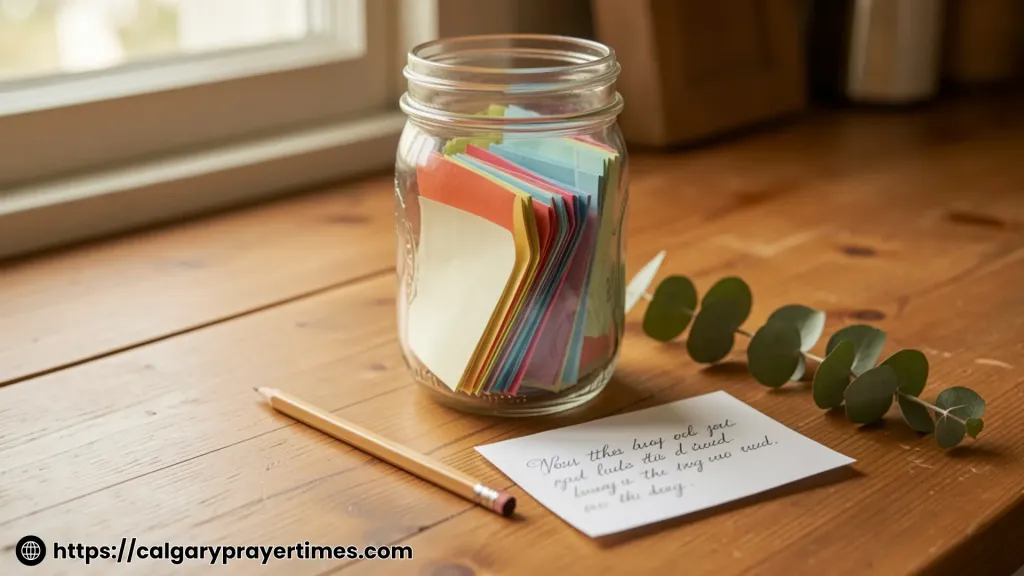
Place a glass jar on your kitchen counter, beside your bed, or on your desk. Every day, write one thing you are grateful for on a small piece of paper and fold it into the jar. A set of small, colourful memo cards or notepad slips makes writing notes feel like a little ritual, and the affordable set works perfectly for a gratitude jar. You do not have to read the notes every day. The jar fills up slowly, and at the end of the month (or when life feels hard), you open it and read through everything good that happened. It is one of the most moving and effective tools for shifting perspective when you are struggling.
This practice works especially well for families. Children love it, it makes gratitude visual and real, and reading the jar together at the end of the month creates a genuine moment of shared appreciation.
3. Tell One Person What You Appreciate About Them Every Day
This practice does two things at the same time: it makes someone else’s day genuinely better, and it forces you to notice the good in the people around you. Once a day, tell someone your spouse, your parent, a friend, a colleague, one specific thing you appreciate about them. Not a general compliment, but something real. I appreciate the way you always listen patiently when I am stressed. “Thank you for making dinner tonight. It really helped.” These small moments of expressed gratitude strengthen relationships and consistently generate happiness for both the giver and the receiver.
4. Reframe One Negative Thought Each Day Using the “But” Technique
This simple technique does not deny that something is hard; it just adds a balancing truth. Take a negative thought and add the word “but” followed by something real and positive. “Today was really stressful and overwhelming, but I finished the most important thing on my list, and I am home now.” “I am feeling anxious about tomorrow, but I have dealt with difficult situations before, and I know I can handle this one too.” The “but” does not erase the difficulty. It just refuses to let the difficulty have the final word.
Use this technique once a day, deliberately. Over time, your brain begins to do it automatically, and that is the real change you are building toward.
5. Write a Gratitude Letter to Someone Who Changed Your Life
Studies by psychologist Martin Seligman at the University of Pennsylvania show that writing and delivering a gratitude letter to someone who made a positive difference in your life produces some of the largest and most long-lasting increases in happiness of any activity he tested. Write a letter to a teacher, a parent, a mentor, a friend, or anyone who did something meaningful for you that you never properly thanked them for. Write it honestly and with detail. Then either deliver it in person, send it by post, or simply read it aloud to them on a call. You will remember this exercise for years.
6. Go on a Daily Gratitude Walk, Notice 5 Beautiful Things
On your next walk, whether that is to the shops, around the block, or through a park, leave your phone in your pocket and deliberately look for five things that are beautiful, interesting, or that you are grateful to be able to experience. A tree you never noticed before. The warmth of sunlight on your face. The colour of a door. A child laughing across the street. The smell of rain. This is not a complicated practice; it is simply the decision to pay attention to the world instead of the inside of your own head. Done daily, it becomes a habit of noticing, and noticing is the foundation of gratitude.
7. End Every Day With One Good Thing That Happened
Before you sleep, recall one good thing that happened during your day. Just one. It does not need to be impressive or significant. The meal was delicious. The conversation flowed easily. The work felt satisfying. The sunset was unusually beautiful. You made someone smile. Writing this one thing in a journal or simply holding it in your mind for 30 seconds before you close your eyes is one of the most effective ways to end your day in a positive emotional state, which directly improves sleep quality and helps you begin the next day with a slightly more optimistic baseline.
8. Use a Guided Gratitude Journal With Daily Prompts
The biggest reason gratitude journaling fails is not a lack of motivation; it is the blank page. When you open a journal and stare at an empty page every morning, you are adding friction to a habit that you want to be effortless. A guided journal removes that friction completely. It gives you structured prompts, “What made you smile today?” A 90-day guided gratitude journal with morning and evening prompts is the most consistent way to make this habit stick for a beautifully designed option with a proven daily format. Who are you grateful for this week and why? What is one thing about your body you are thankful for? So you never have to decide what to write. You just answer honestly, and the practice takes care of itself.
9. Build Gratitude Into Your Prayer and Daily Remembrance
Gratitude has always been central to faith. In Islam, saying Alhamdulillah, “all praise and thanks belong to Allah,” is one of the most powerful and most frequently repeated expressions in the tradition. The Prophet Muhammad ﷺ said: “Whoever does not thank people does not thank Allah.” Building deliberate gratitude into your daily prayers and remembrance connects this practice to its deepest roots. It is not separate from faith; it is an expression of it. Whether you are Muslim or of another faith tradition, connecting gratitude to your spiritual practice gives it a depth and consistency that secular habits alone rarely achieve.
10. Do a 30-Day Gratitude Challenge, One New Practice Each Day
Take the 10 practices in this post and turn them into a personal 30-day challenge. Assign two or three days to each practice, rotating through them so you experience the full range of gratitude tools over the course of the month. A gratitude challenge card deck makes following the 30-day format simple and fun. Pull one card each morning for your daily prompt. A quality pen that you enjoy writing with makes the whole experience more of a pleasure than a task. Some will feel more natural to you than others, and that is fine. The goal of the 30-day challenge is not perfection. It is exposure. By the end of the month, you will have discovered which practices feel most authentic to you, and those are the ones to continue building your long-term gratitude habit around.

🙏 Your First 7 Days, A Simple Starter Plan
- Day 1: Write 3 specific morning gratitudes in any notebook you have. Do not wait for the perfect journal.
- Day 2: Tell one person something specific you appreciate about them. Make it real and direct.
- Day 3: Start your gratitude jar. Write one note and put it in. Place the jar somewhere visible.
- Day 4: Go on a gratitude walk. Leave your phone in your pocket and count five beautiful things.
- Day 5: Before sleeping, write one good thing that happened today. One sentence is enough.
- Day 6: Try the “But” technique on one negative thought you notice today.
- Day 7: Write a gratitude letter to someone. You do not have to send it; the writing itself is the practice.
❓ Frequently Asked Questions
🙏 A More Grateful Life Is 30 Days Away
Save this post to your Pinterest gratitude board and come back to it whenever you need a perspective reset. If you purchase through any links in this post, a small commission supports this blog at no extra cost to you. Thank you for reading. 💚