
10 Simple Daily Habits for a Clutter-Free Home (That Take Under 5 Minutes Each)
Simple Daily Habits Clutter Free Home because the fantasy version of a clutter-free home involves a dramatic weekend purge, three days, every cupboard emptied, everything you own reconsidered. The reality is different. A clutter-free home is maintained daily, not created once. It is the result of ten small habits, each taking under five minutes, that prevent clutter from building up in the first place. These habits are so small that individually they seem trivial. Collectively, they change how your home feels every single day.
Why Clutter Costs More Than You Think
Research from Princeton University’s Neuroscience Institute found that visual clutter directly competes for your attention with whatever you are trying to focus on, reducing cognitive performance, increasing stress hormones, and creating a persistent low-level anxiety that the brain interprets as an environmental threat. UCLA research found that women who described their homes as “cluttered” had measurably higher cortisol levels throughout the day than those who described their homes as “restful,” regardless of home size or income. A clutter-free home is not a luxury aesthetic preference. It is a daily health decision with home cleaning.
The 10 Habits
1. The One-In-One-Out Rule, Every Single Day
The most effective long-term clutter prevention habit is the one-in-one-out rule: every time something new enters your home, something else leaves. A new book arrives, and one book goes to the charity box. A new kitchen item comes in one leaf. New clothing, one item exists. This habit prevents the slow accumulation that is the primary source of household clutter. Most North American homes did not become cluttered through dramatic shopping events; they became cluttered through hundreds of small additions without any corresponding removals. The one-in-one-out rule addresses this incrementally and without requiring any willpower after the decision to implement it is made.
2. The “Everything Has a Home” System
Clutter is not fundamentally a problem of having too many things. It is a problem of things not having a place to live. When every item in your home has a specific, designated location, putting things away takes seconds rather than requiring decisions. The habit is: before implementing any organisational system, give every item a designated home, and when that home is full, something leaves before anything new enters. Any item that does not have a clear home is either genuinely homeless (it needs a designated spot) or genuinely unnecessary (it needs to leave). A set of natural seagrass storage baskets in three graduated sizes creates beautiful, visible homes for the items that tend to clutter living room and bedroom surfaces, such as remote controls, charging cables, blankets, and magazines, making putting things away effortless because the basket is right there.
3. The Two-Minute Rule: If It Takes Under Two Minutes, Do It Now
David Allen’s productivity research introduced this rule in the context of task management, but it applies equally powerfully to home maintenance. If returning something to its place, washing a dish, wiping a surface, putting away a coat, or sorting a piece of post takes under two minutes, do it immediately rather than leaving it for later. “Later” is where clutter lives. Most individual clutter events are two-minute tasks deferred into a 30-minute weekend clean-up session. The two-minute rule eliminates this deferral and keeps every surface in a constant state of near-readiness.
4. Clear All Surfaces Before You Sleep, Every Night
Clutter accumulates in layers throughout the day: a piece of post on the counter, a glass left on the coffee table, a bag dropped on the chair, and shoes not put away. Each item is minor. Together, by evening, they create the visual noise that makes a home feel chaotic. The evening surface clear, spending three to five minutes returning every visible item to its home before going to bed, ensures that you wake up to a room that starts the day calm rather than from a deficit. This single habit is the most consistently cited “life-changing” home habit among North American lifestyle bloggers who have implemented it. It takes under five minutes and transforms the felt quality of every morning.
5. Create a Simple Entryway System
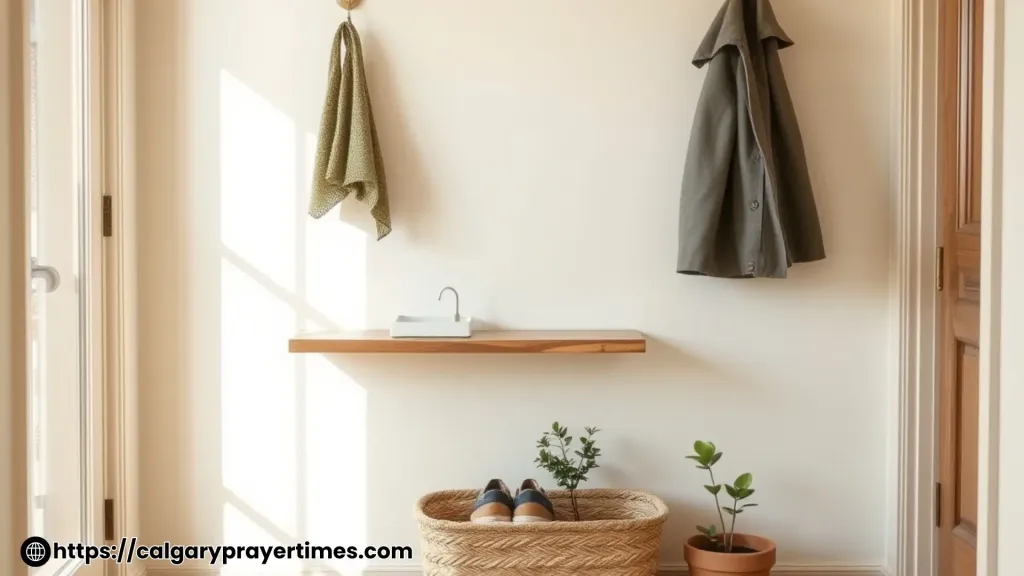
The entryway is where most household clutter originates: shoes not taken to their room, bags not hung up, coats draped over chairs, keys placed on any available surface. A simple entryway system creates a home for all of these within seconds of arriving: a hook for each person’s coat and bag, a basket or shoe rack for shoes, and a small tray or hook for keys and post. This system does not need to be extensive or expensive. Three hooks on a wall, one basket on the floor, and one small tray on a shelf eliminates 80% of entryway clutter permanently because the habit of using it takes under 30 seconds and feels significantly better than dumping everything on a chair.
6. Handle Post and Paper on the Day It Arrives
Paper and post are one of the most consistent sources of kitchen and counter clutter in North American homes because it arrives daily, sit in a growing pile, and require decisions that most people defer. The habit is to handle every piece of post on the day it arrives: open it immediately, decide its fate (action required, file, or recycle), and complete that fate within 24 hours if possible. A small desk organiser or letter rack with three slots, “Action,” “File,” and “Recycle,” makes this system completely effortless. The “Recycle” slot should be emptied daily; the “File” slot weekly; the “Action” slot should never contain items older than 48 hours. A bamboo desktop organiser with three compartments for paper sorting makes the daily post-handling habit completely automatic. The system is visible, beautiful, and requires no decisions about where to put something.
7. The “One Bag Out” Monthly Donation Habit
Once a month, fill one grocery bag, a canvas tote, or a small bin bag with items from your home that are no longer used, no longer needed, or no longer loved, and donate or dispose of it by the end of that week. This habit removes approximately 12–15 bags of accumulated-but-unused items from the average North American home per year. It does not require a dramatic declutter session, just one bag, filled slowly over the course of a week by noticing what you never reach for when you open a cupboard. The monthly cadence prevents the re-accumulation that follows big, infrequent declutter sessions.
8. Never Put Anything “Temporarily” on a Surface
The most persistent clutter pattern in every home is the “temporary placement,” putting something on a surface “just for now” with the intention of moving it later. “Later” never comes, and the temporary item becomes part of the permanent surface landscape within days. The habit is to eliminate the concept of temporary surface placement. Every time you have something in your hand, it goes either to its designated home or into a basket/bin for processing, never to an “I’ll deal with it later” surface. This habit alone reduces visible clutter by 40–60% in most homes within a week of consistent implementation.
9. A Weekly 10-Minute Whole-Home Reset
Even with daily habits in place, a weekly 10-minute whole-home reset catches everything that the daily habits missed, items that migrated to the wrong room, things on surfaces that have been there so long they have become invisible, and a drawer that needs straightening. Walk through every room with a basket, collect anything that does not belong, and return everything to its home. Wipe visible surfaces. Tidy any basket or shelf that has become messy. This 10-minute weekly reset prevents the gradual drift that eventually requires a full decluttering session and is most effective done consistently on the same day each week (Sunday evening and Saturday morning are the most popular North American choices).
10. The “Does This Earn Its Space?” Annual Review
Once a year, in January, spring, or Eid/summer, are natural review moments to go through each area of your home and ask a single question about every item: Does this earn its space here? Not “do I love this?” (everything feels vaguely loved when you are deciding whether to keep it), but “does this actively serve me, regularly and genuinely?” Items that pass this test stay. Items that fail are kept out of guilt, inertia, or vague sentiment; without regular use, they leave. This annual review is what prevents the slow growth of the home’s total item count, even when the daily habits are working well. A set of clear stackable storage bins with labels for cupboards and shelves makes the “everything has a home” system instantly visible and maintainable when storage is clear and labelled, every family member knows exactly where things live and where to return them.
❓ Frequently Asked Questions (FAQs)
🧹 A Calmer Home Is Built One Small Habit at a Time
Save this to your home organisation boards. Start with the evening surface clear tonight. If you purchase through any link, a small commission supports this blog at no extra cost to you. Thank you. 💚