Easy High-Protein Meal Prep for Beginners (A Simple System That Takes Under 90 Minutes)
Easy High Protein Meal Prep Beginners Guide. High-protein meal prep has become the most searched food category in North America in 2026, and for good reason. Adequate protein (25–35g per meal) stabilises blood sugar, controls hunger between meals, supports muscle health and metabolism, and improves energy and focus throughout the day. The problem is that most meal prep content assumes experience, it shows complicated recipes, elaborate systems, and dozens of containers, and it intimidates the people who need meal prep most. This guide is for complete beginners. One system, five steps, under 90 minutes, and food that genuinely tastes good all week.
Why High Protein? The Case in Under 100 Words
Protein is the macronutrient that keeps you full the longest. It takes more energy to digest than carbohydrates or fat, and it produces sustained satiety signals that reduce snacking and overeating. Research from the American Journal of Clinical Nutrition shows that higher protein diets consistently outperform standard diets for body composition, energy levels, and long-term adherence because they are more satisfying. In practical terms, people who eat adequate protein at every meal are significantly less likely to feel hungry at 10 AM after breakfast or reach for a vending machine at 3 PM. The goal is not a “high protein diet.” It is adequate protein at every meal, consistently. A rice and grain cooker with a keep-warm function makes batch grain cooking completely hands-off. Add grain and water, press the button, and the grain is perfectly cooked when you come back to it, without any monitoring, timing, or boilover.
3. Roast Two Trays of Vegetables
Roasted vegetables are the third leg of the beginner meal prep system. They add colour, nutrition, fibre, and flavour to every bowl, wrap, and plate throughout the week, and they are virtually impossible to mess up. Preheat your oven to 425°F. Chop two large trays of vegetables into similar-sized pieces (so they cook evenly), toss with olive oil, salt, and pepper, spread in single layers on two baking sheets, and roast for 20–25 minutes until edges are caramelised. Excellent roasting vegetables for meal prep: bell peppers, broccoli, courgette, sweet potato, red onion, cherry tomatoes, cauliflower, and asparagus. Use whatever is in season, on sale, or already in your fridge.

4. Assemble Into Containers, The Most Satisfying Step
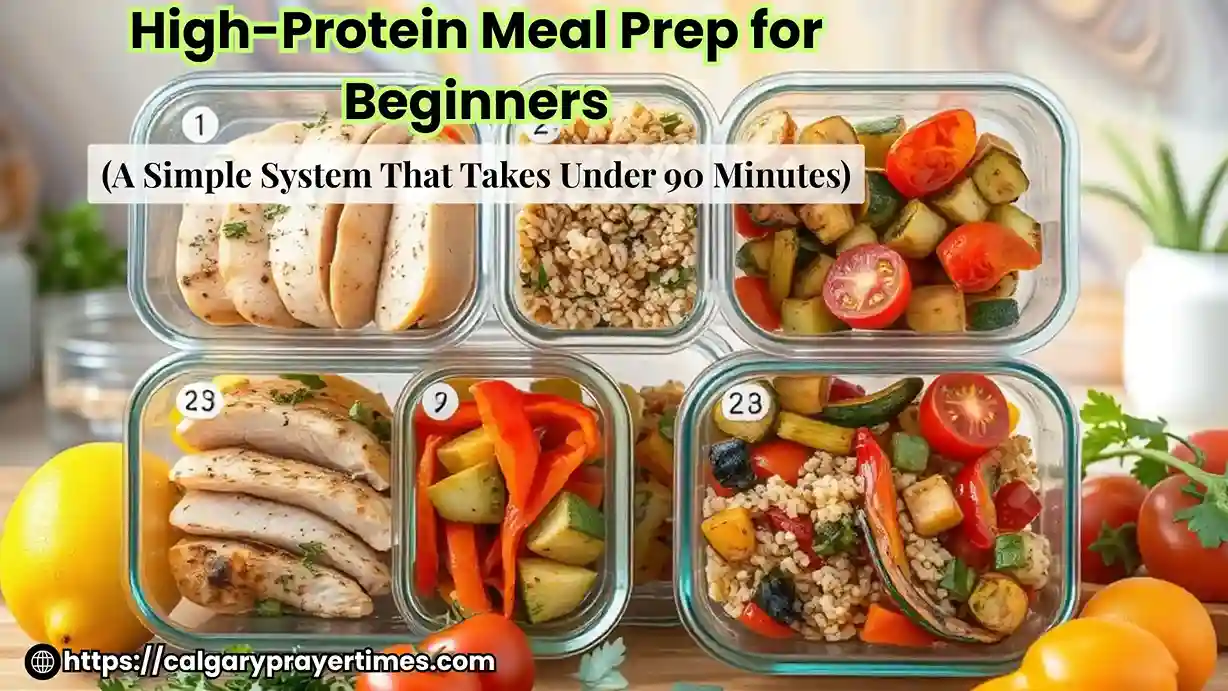
Once your protein, grain, and vegetables are cooked and slightly cooled, assemble them into individual meal prep containers. The beginner formula is simple: each container gets one-quarter of the week’s protein batch, one-quarter of the grain batch, and a generous serving of roasted vegetables. Add any extras a handful of fresh salad greens, a drizzle of tahini or olive oil, a sprinkle of seeds or nuts that will make opening the container tomorrow feel like a reward rather than a necessity. Store dressings, sauces, and fresh toppings separately in small jars or condiment cups to keep everything fresh until the moment of eating.
5. Label, Refrigerate, and Set a Rotation Schedule
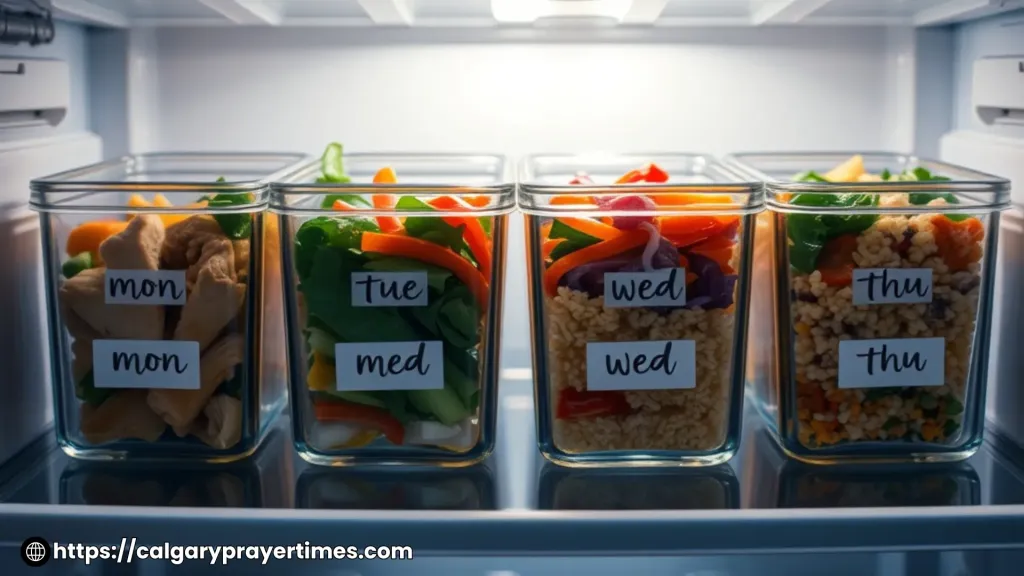
Label every container with the day it should be eaten: Monday, Tuesday, Wednesday, Thursday, and store them at the front of the fridge shelf so they are immediately visible and accessible. The rotation schedule is important: even well-prepared food has a quality window, and eating containers in order ensures that the freshest food is eaten last while nothing is wasted. Containers with cooked chicken stay optimal for 4 days. Containers with eggs for 5 days. Containers with hard-boiled eggs (unpeeled) for 7 days. Do not prep more than you will realistically eat in a week. A smaller, successful prep is far more valuable than an ambitious prep that produces waste. A set of glass meal prep containers with airtight, leakproof lids in two sizes, rectangular containers for assembled bowls, and smaller round ones for snacks and dressings, is the single most important investment in a successful and consistent meal prep habit.
Your First Beginner Meal Prep Shopping List
- Protein: 4–6 chicken breasts (or a can of chickpeas + a can of tuna for a faster option)
- Grain: 2 cups quinoa or brown rice
- Vegetables: 2 bell peppers, 1 head of broccoli, 1 courgette, 1 red onion, 1 punnet of cherry tomatoes
- Dressing: Olive oil, lemon, garlic, salt, pepper. The simplest dressing that works with everything
- Extras: A bag of baby spinach for fresh greens, a small bag of pumpkin seeds or toasted almonds for crunch
Total approximate cost: $35–$50 for four to five lunches and two dinners, significantly less than the equivalent number of purchased meals in any North American city.
❓ Frequently Asked Questions
🥗 Your Week of Healthy Eating Starts on Sunday Morning
Save this to your meal prep or healthy eating boards. Try the system this Sunday: one protein, one grain, two trays of vegetables. That is the entire starting point. If you purchase through any link, a small commission supports this blog at no extra cost to you. Thank you. 🍋